
College Football’s Fastest: 40 Times by Position
The 40-yard dash stands as a critical benchmark in college football. This lightning-fast sprint can make or break a player’s prospects, turning heads and opening doors to professional opportunities.

Average College Football 40 Yard Dash Times by Position
You’ll find that the average 40-yard dash times vary significantly across positions in college football, reflecting the unique physical demands of each role on the field. Understanding these benchmarks can give you insight into what coaches and scouts are looking for as they evaluate talent at different positions.
You can see the average 40-yard dash times for high school, college, and professional football players with these links.
Significance of the 40 Yard Dash in College Football

The 40-yard dash holds immense importance in college football. It’s a key measure of a player’s speed and explosiveness, often influencing their future prospects and playing positions.
Historical Context
The 40-yard dash has been a standard test for football players for decades. You might wonder why 40 yards specifically? This distance was chosen because it’s the average length a player covers on a punt.
In the early days, coaches timed players with handheld stopwatches. Now, you’ll see electronic timing systems at events like the NFL Combine. These provide more accurate results.
The test gained prominence in the 1960s. It became a crucial part of player evaluation. Scouts and coaches use it to assess a player’s potential impact on the field.
Training and Preparation Techniques
To improve your 40-yard dash time, you need a solid training plan. Focus on explosive starts and acceleration techniques. These are crucial for those first few yards.
You should incorporate sprint drills into your routine. Practice your stance and first step. Every fraction of a second counts.
Strength training is also vital. Work on your leg power with squats and plyometrics. Don’t neglect your upper body – a strong core helps maintain proper form.
Proper nutrition and recovery are essential. Fuel your body with the right nutrients. Get enough rest between training sessions. This helps prevent injuries and ensures peak performance.
Position-Specific 40 Yard Dash Times
The 40-yard dash reveals the blazing speed of college football’s elite. You’ll find each position has its own benchmark, reflecting the unique demands of the game.
Quarterbacks

In the quarterback position, raw speed isn’t everything, but it’s becoming increasingly valuable. You’ll see most college QBs clocking in between 4.7 and 4.9 seconds. The average 40 time for D1 quarterbacks hovers around 4.8 seconds.
For a signal-caller, this dash time can make the difference between escaping a sack and hitting the turf. Mobile quarterbacks who can threaten with their legs are changing the game. They keep defenses honest and open up new offensive possibilities.
Remember, arm strength and decision-making still reign supreme for QBs. But that extra burst can turn a broken play into a game-changing scramble.
Wide Receivers
When it comes to wide receivers, you’re looking at some of the fastest players on the field. These speedsters typically post times between 4.3 and 4.55 seconds. Top D1 receivers average around 4.48 seconds in the 40-yard dash.
Lightning-fast wideouts can:
- Separate from defenders in an instant
- Turn short catches into long gains
- Stretch the field vertically, keeping safeties on their toes
You’ll notice coaches drooling over sub-4.4 times. These burners can take the top off a defense and change the game in a single play.
But don’t forget, route-running precision and sure hands are just as crucial. The 40 time is just one piece of the puzzle for elite receivers.
Running Backs
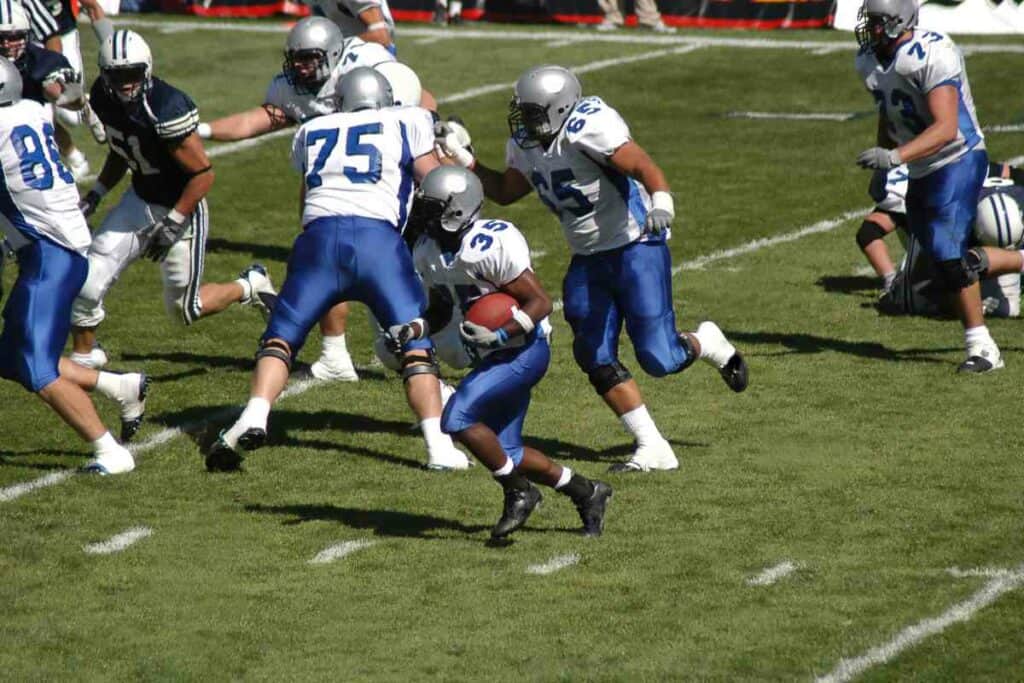
For running backs, explosiveness is the name of the game. You’ll typically see these players clocking in between 4.4 and 4.6 seconds. The average for top D1 running backs is about 4.49 seconds.
This burst of speed allows backs to:
- Hit holes quickly before they close
- Outrun linebackers to the edge
- Break away from the secondary in the open field
Remember, a great 40 time doesn’t always translate to on-field success. Vision, agility, and power are equally important for a back’s toolkit.
You’ll find that the most successful college running backs blend speed with these other crucial attributes. It’s this combination that turns good backs into great ones.
Defensive Linemen
When you think of defensive linemen, raw speed might not be the first thing that comes to mind. But don’t be fooled – these big men can move. Most college D-linemen clock in between 4.7 and 5.2 seconds in the 40-yard dash.
For these trench warriors, the 40 time indicates:
- Ability to chase down plays from behind
- Potential to disrupt plays in the backfield
- Overall athleticism and explosiveness
You’ll notice that elite edge rushers often post times closer to linebackers. Interior linemen typically run a bit slower, but their short-area quickness is more crucial.
For D-linemen, the 10-yard split of the 40 is often more telling than the full time. It’s that initial burst that can make or break a play at the line of scrimmage.
Linebackers
Linebackers need to be the Swiss Army knives of the defense, and their 40 times reflect this versatility. You’ll typically see college linebackers running between 4.5 and 4.8 seconds.
These times allow linebackers to:
- Cover running backs out of the backfield
- Close quickly on ball carriers
- Drop into pass coverage effectively
The modern game demands more speed from linebackers than ever before. You’ll notice that many teams are moving towards hybrid safety-linebacker types to keep up with spread offenses.
But don’t forget, play recognition and tackling ability are still paramount. A linebacker’s 40 time is just one indicator of their potential impact on the field.
Impact of 40 Yard Dash Times on Player Recruitment

The 40 yard dash can make or break a player’s chances of getting noticed by college recruiters. Your time in this crucial sprint can open doors to scholarships or leave you struggling to catch coaches’ eyes.
Scouting and Evaluation
When you’re being scouted, your 40 yard dash time is often the first thing coaches look at. It’s a quick way to gauge your raw speed and explosiveness. A fast time can put you on the radar of top programs.
For skill positions like wide receiver or cornerback, you’ll need to be especially quick. Running backs and linebackers have a bit more wiggle room, but still need to show they can keep up.
Coaches use these times to sort through hundreds of prospects. If you’re significantly slower than average for your position, you might not make it past the first cut.
Comparison with Other Metrics
Your 40 time isn’t the only thing scouts look at, but it’s a big piece of the puzzle. They’ll compare it to your game film, your vertical jump, and your strength numbers.
A great 40 time paired with impressive game stats can make you a hot prospect. But if your time doesn’t match your on-field performance, coaches might question your potential.
Key metrics compared to 40 time:
- Game speed
- Vertical jump
- Bench press reps
- Agility drills (3-cone, shuttle)
Coaches will look at how these numbers work together. A slightly slower 40 might be forgiven if you’re a beast in the weight room or show incredible game instincts.
Influence on Scholarship Offers
Your 40 time can directly impact your chances of getting a scholarship. At the D1 level, coaches often have specific time targets for each position. Meeting or beating these can put you in the running for top offers.
For skill positions, a blazing 40 time might even lead to scholarship offers before coaches see your game film. It’s that powerful of a recruiting tool.
But don’t panic if you’re not the fastest. Coaches also value consistency and improvement. If you can show progress in your times over your high school career, it demonstrates your work ethic and potential for further growth.
Frequently Asked Questions

The 40-yard dash is a crucial test for college football players. It measures speed and explosiveness, impacting draft prospects and professional opportunities. Let’s dive into some common questions about this pivotal assessment.
What benchmarks do scouts look for in a 40-yard dash at the college level for various positions?
Scouts have specific expectations for each position. For wide receivers and cornerbacks, you’ll want to aim for sub-4.5 second times. Running backs should target the 4.5-4.6 range.
Linebackers and tight ends often fall in the 4.6-4.8 second bracket. Offensive and defensive linemen typically clock in between 4.9-5.2 seconds.
How does the average 40-yard dash time vary among different college divisions for aspiring professional athletes?
Division I athletes generally post the fastest times. D1 players average around 4.5-4.7 seconds, depending on position.
D2 and D3 athletes might be slightly slower, but exceptional talents can match D1 speeds. Remember, raw speed isn’t everything – technique and game performance matter too.
What are considered elite 40-yard dash times in college football, and how do they impact a player’s draft prospects?
Elite times can vary by position. For skill positions, anything under 4.4 seconds is exceptional. A sub-4.3 time can skyrocket your draft stock.
For linemen, breaking 5.0 seconds is impressive. These blazing times can boost your draft position significantly, potentially moving you up entire rounds.
How has the evolution of player training and development affected average 40-yard dash times over recent years?
Advanced training methods have led to faster times across the board. Speed-specific drills, improved nutrition, and better understanding of biomechanics all contribute.
You’ll see more players hitting elite benchmarks now than in past decades. This trend raises the bar for what’s considered “fast” at each position.
In what way do the physical attributes of college football players by position correlate with their 40-yard dash times?
Height and weight play a role in 40-yard dash performance. Shorter, lighter players like cornerbacks and receivers tend to post the quickest times.
Meanwhile, taller, heavier players like linemen naturally run slower. However, exceptional athletes can buck these trends, making them highly valued prospects.
What are the implications of a college football player’s 40-yard dash time on their potential career progression and professional opportunities?
Your 40 time can open doors to professional opportunities. A blazing sprint might earn you a combine invite or boost your draft position.
However, it’s not the only factor. Game film, character, and overall athleticism all play crucial roles. A great 40 time gets you noticed, but your on-field performance seals the deal.