
What is the Baseball Foul Line: A Clear Explanation
The baseball foul line plays a crucial role in determining the outcome of many plays during a game. As a fan or player, it’s essential to understand what constitutes a foul line and its importance to the sport. The foul line is a boundary marker that extends from home plate through first and third bases in the infield, stretching all the way to the outfield wall. It separates fair territory from foul territory, with the entire width of the line considered part of fair territory.

A solid grasp of the baseball foul line rules will not only help you appreciate the game better but also improve your overall performance and decision-making on the field. In general, any batted ball that lands or passes over the foul line in fair territory is considered a fair ball, while those landing in foul territory are deemed foul balls. These guidelines are critical in deciding hits, outs, and home runs.
Key Takeaways
- The baseball foul line is a boundary marker that extends from home plate through first and third bases.
- Understanding the foul line helps appreciate the game and improve on-field decision-making.
- Foul line rules determine if a batted ball is considered a fair ball or a foul ball.
Understanding Baseball Foul Line
The baseball foul line is an essential aspect of the game as it plays a crucial role in determining the difference between fair and foul territory. To fully comprehend the significance of the foul line, it’s vital to be aware of its definition and uses.
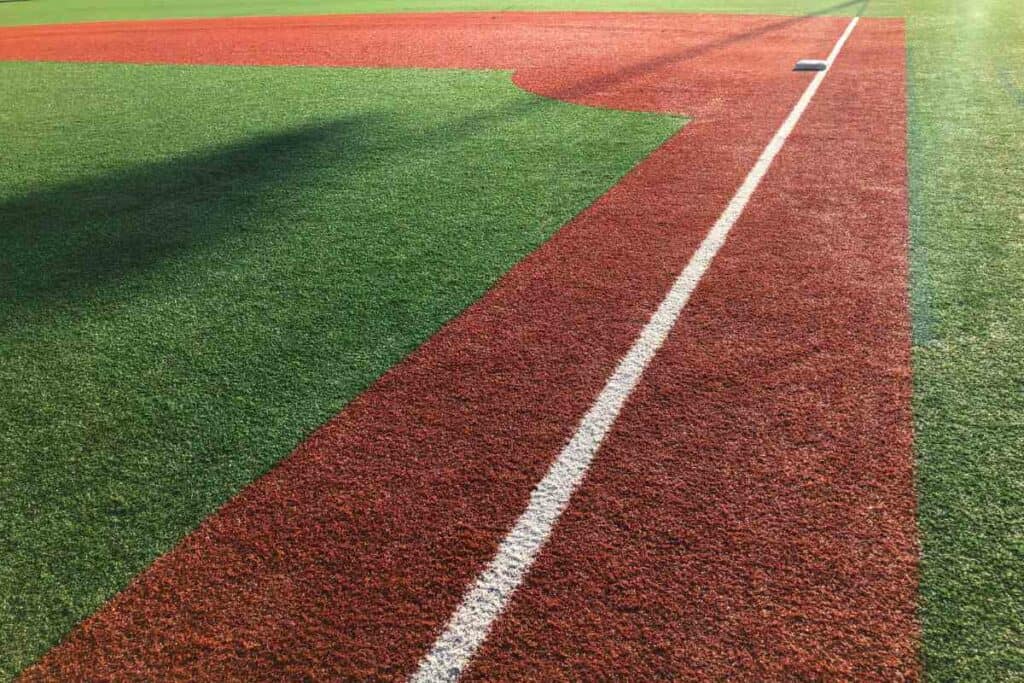
Foul lines in baseball are boundary markers that extend from home plate, passing through first and third bases, and stretching to the outfield wall. These lines help differentiate fair territory from foul territory, and it’s important to note that the entirety of the foul line width is part of the fair territory.
Now that you understand the basic concept of the baseball foul line, let’s examine its uses and implications in the game:
- When a baseball is hit onto the foul line, it is considered to be in fair territory.
- If a baseball is hit into foul territory beyond these lines, it is deemed a foul ball.
- All fielders, except the catcher, must be in fair territory before the ball is in play.
There are some key aspects of the foul line that every baseball player or fan should know:
- Foul lines are made of lime and extend from the corners of home plate, past first and third base, to the foul poles.
- Despite being called “foul lines,” these lines are entirely in fair territory, which is why they are occasionally referred to as “fair lines.”
In summary, the baseball foul line plays an important role in determining fair and foul territories within the game. It is a boundary marker that extends from home plate, through first and third bases, to the outfield wall. Understanding and observing the foul lines is essential for both players and fans to follow the game accurately and enjoy its intricacies.
Details of the Foul Line
Dimensions and Marking
The baseball foul line extends from home plate through first and third bases to the outfield wall, and its entire width is part of the fair territory 1. In a standard MLB ballpark, the distance between home plate and first or third base is 90 feet.
The chalk used to mark the lines is generally white, with a thickness varying depending on the league. The foul line typically runs straight and extends from the first and third bases until it meets the foul poles.
Role in Gameplay
In a baseball game, the foul line serves as a boundary marker separating fair territory from foul territory. A ball that lands on or inside the foul line is considered a fair ball, while a ball that lands outside the foul line is a foul ball2.
Fielders use the foul line to position themselves accordingly to catch or field batted balls. If a fielder catches a ball in the air, it’s considered an out if it’s in the fair territory, regardless of the fielder’s position 3.
Official Rules and Interpretations
According to the official baseball rules, a fair ball is a batted ball that:
- Settles on fair ground between home plate and first or third base
- Bounds past first or third base on or over the foul line
- First touches the ground in fair territory beyond first or third base
- Touches the first, second, or third base bag
- Touches a player, umpire, or any part of the foul line while on or over fair territory
Conversely, a foul ball is a batted ball that:
- Settles on foul ground between home plate and first or third base
- Bounds past first or third base on the ground, outside the foul line
- First touches the ground in foul territory beyond first or third base
- While on or over foul territory, the ball touches a player, umpire, or any object other than the ground
Umpires have the responsibility of determining whether a batted ball is fair or foul according to these rules.
Foul Line in Different Leagues
While MLB sets the standard for professional-level baseball, other youth leagues and organizations can have slightly varying rules regarding the foul line.
Dimensions and marking materials may vary, but the fundamental role of the foul line in gameplay remains the same across all levels of baseball. Understanding the nuances and specifics of your league’s foul line regulations can enhance your experience on the field.