
What Are the Referee Positions in College Football, and What Are Their Responsibilities?
College football games are a thrilling spectacle, but behind the scenes, a team of officials works tirelessly to ensure fair play. The officiating crew in college football typically consists of seven positions: the referee, umpire, line judge, side judge, back judge, field judge, and center judge, each with unique responsibilities crucial to the game’s integrity.

These officials, clad in their distinctive black and white striped shirts, are the unsung heroes of every college football matchup. They make split-second decisions that can change the course of a game, interpreting complex rules and maintaining order on the field. From spotting the ball to calling penalties, each member of the crew plays a vital role in the smooth execution of America’s beloved sport.
As we delve into the world of college football officiating, we’ll explore the specific duties of each position and how they work together to create the seamless experience fans enjoy every Saturday. Whether you’re a die-hard fan or a casual observer, understanding the intricacies of officiating will deepen your appreciation for the sport and the dedicated individuals who keep it fair and exciting.
Key Takeaways
- College football games are officiated by a crew of seven officials with distinct roles
- Each official position requires specific skills and responsibilities to ensure fair play
- Understanding officiating enhances the viewing experience for fans and players alike
Understanding College Football Officiating
College football officiating is a complex system designed to ensure fair play and maintain the integrity of the game. The officiating crew works together seamlessly, each member fulfilling a crucial role on the field.
Roles and Responsibilities of the Referee
The referee is the final authority on the field. He wears a white hat, setting him apart from other officials. The referee oversees the entire officiating crew and makes the final call on disputed plays.
His responsibilities include:
- Announcing penalties
- Signaling the start of each quarter
- Reviewing instant replay challenges
The referee positions himself behind the offensive backfield, giving him a clear view of the snap and initial play development. His keen eye and quick decision-making skills are crucial for maintaining the flow of the game.
The Umpire: Guardian of the Line of Scrimmage
The umpire stands behind the defensive line, keeping a watchful eye on the line of scrimmage. This position requires a unique blend of physical toughness and mental sharpness.
Key duties of the umpire include:
- Monitoring illegal blocks and holding penalties
- Ensuring the correct number of players on the field
- Assisting in spotting the ball after each play
The umpire’s proximity to the action puts him in the heart of the game’s most physical battles. His decisions can often shape the outcome of crucial plays.
Line Judge and Side Judge: Masters of the Sidelines
These officials patrol the sidelines, each covering their respective side of the field. Their primary focus is on plays that develop near the boundaries.
Their responsibilities include:
- Determining if a player steps out of bounds
- Monitoring forward progress
- Assisting with pass interference calls
The line judge and side judge must possess excellent spatial awareness and the ability to make split-second decisions. Their rulings on sideline catches and out-of-bounds plays can be game-changers.
Back Judge, Field Judge, and Side Judge: The Deep Field Trio
This trio of officials covers the deep areas of the field. They work in tandem to monitor downfield action, particularly in passing situations.
Their key duties include:
- Watching for pass interference
- Judging if a catch is complete
- Monitoring the play clock
These officials need exceptional vision and the ability to track multiple players simultaneously. Their positioning allows them to see plays develop from a unique vantage point.
Comparing College Football to Other Levels
College football officiating shares similarities with both NFL and high school football, but there are notable differences.
College football uses a seven-person crew, while the NFL employs eight officials. High school games typically use five or six officials.
Key differences:
- College football has stricter rules on player celebrations
- Instant replay review processes vary between levels
- Clock management rules differ, particularly at the end of halves
These variations reflect the unique nature of college football, balancing the game’s traditions with the need for fair and efficient officiating.
Critical Actions and Signals of the Refereeing Crew

The refereeing crew‘s actions and signals are the heartbeat of college football, keeping the game fair and flowing. These officials use a complex system of flags, gestures, and communication to enforce rules and manage the game’s rhythm.
Flagging Penalties: The Art of the Yellow Flag
The yellow flag is the referee’s most visible tool. It flies through the air like a beacon, signaling a rules violation. Officials must be quick and decisive when throwing flags.
False starts and offsides are common infractions that require sharp eyes. The line judge watches the trenches like a hawk, ready to toss the yellow cloth at the slightest early movement.
Holding and pass interference penalties often spark debate. These calls demand split-second judgments from officials positioned strategically around the field. Their signals must be clear and confident, leaving no doubt about the infraction.
Managing the Down System and the Chain Crew
The down judge and chain crew form a crucial partnership. They track the offense’s progress, determining if teams reach the coveted first down.
The chain crew moves the markers after each play. Their precision is vital – inches can decide games. The down judge signals the new down, arm raised high to inform players, coaches, and fans.
This system keeps the game’s momentum. It’s a dance of efficiency, with officials and crew members working in perfect sync. Their actions may seem small, but they’re the foundation of football’s structure.
The Impact of Calls on a Football Game
Every whistle and flag can change a game’s course. A well-timed offside call might save a touchdown. A missed holding penalty could lead to a game-winning play.
Officials carry this weight on their shoulders. They must be fair and transparent in their decisions. Their calls can ignite or deflate a team’s spirit.
Coaches and players watch officials closely, looking for consistency. The best refs earn respect through their steady hands and keen eyes. They become as much a part of the game as the players themselves.
Communication and Collaboration Among Officials
The refereeing crew is a team within the game. They must work together flawlessly, often communicating without words.
Hand signals and whistles create a language all their own. A head nod or quick gesture can convey volumes between officials. This silent conversation ensures smooth game flow.
Regular huddles allow the crew to discuss complex situations. They share perspectives, ensuring the right call is made. This collaboration is the backbone of effective officiating.
Technology now aids officials, but their teamwork remains essential. They must trust each other’s judgment and support collective decisions. This unity maintains the integrity of the game.
The Impact of Officiating on Players and Coaches
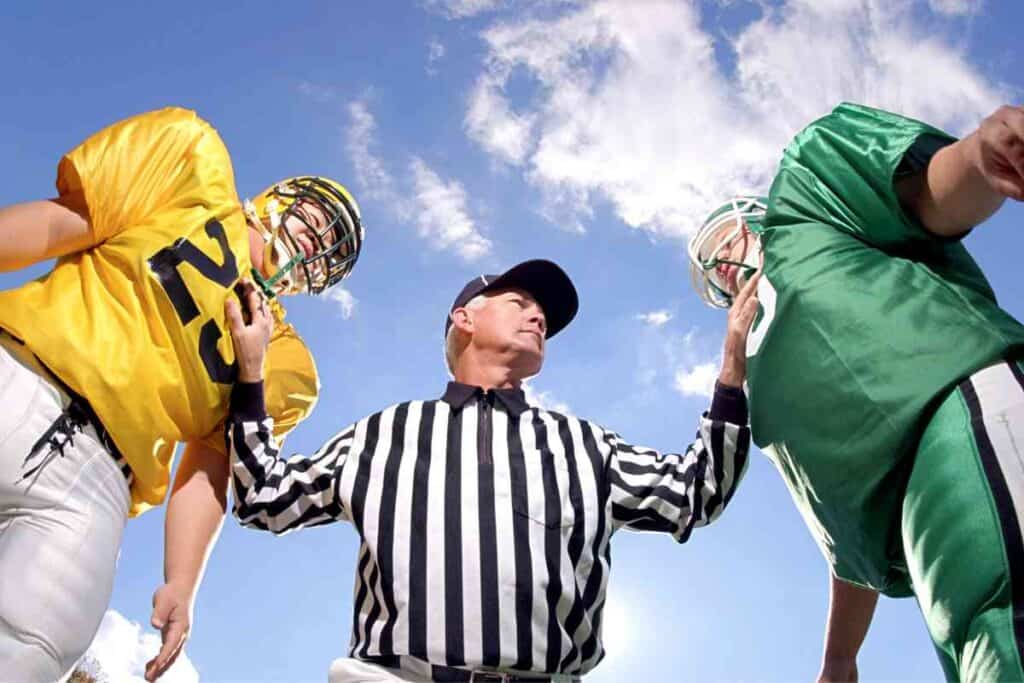
Referees wield immense influence on the gridiron, shaping the game’s flow and outcomes. Their decisions can spark triumph or heartbreak, while their vigilance safeguards players and upholds the sport’s integrity.
Ensuring Fair Play and Player Safety
Football officials serve as guardians of the rulebook, their keen eyes spotting infractions that could tilt the scales unfairly. Every penalty flag thrown can shift momentum, turning the tide of battle in an instant. These zebra-striped sentinels don’t just enforce rules; they protect the warriors on the field.
When a referee spots a dangerous tackle or an illegal hit, their whistle pierces the air. It’s not just about yards gained or lost – it’s about preserving careers and lives. Player safety takes center stage, with officials trained to recognize potential harm in the blink of an eye.
Offensive players rely on refs to keep defensive tactics in check. Eligible receivers must be free to run their routes without illegal contact. The dance between aggression and restraint plays out under the watchful gaze of the officiating crew.
Coaching Strategies and Referee Interaction
Savvy coaches know the game within the game – the art of referee relations. They study officiating tendencies like game film, adapting strategies to match. A ref’s reputation for tight or loose calls can influence play-calling and player instructions.
Sideline demeanor becomes a tactical tool. Coaches who build rapport with officials might find a sympathetic ear when debating a close call. But cross the line, and that yellow flag could fly, costing precious yards.
Football managers and players must master the delicate balance of respect and assertiveness. Knowing when to challenge a call and when to bite one’s tongue can be as crucial as any X’s and O’s drawn up in the locker room.
Respect for Officials: A Pillar of the Game
The gridiron code demands respect for those who don the stripes. Players who argue calls too vehemently risk penalties, ejection, or worse – a reputation that follows them. Coaches teach more than just plays; they instill a culture of respect for the game’s arbiters.
This respect flows both ways. Officials who command the field with fairness and clarity earn the trust of players and coaches alike. Their decisions, though sometimes controversial, become easier to accept when delivered with consistency and professionalism.
The impact of on-field referees extends beyond the scoreboard. They shape the very character of the sport, fostering an environment where rules reign supreme and sportsmanship thrives. In the heat of competition, it’s the mutual respect between officials, players, and coaches that elevates football from mere game to revered institution.
Officiating and the Rhythm of the Game
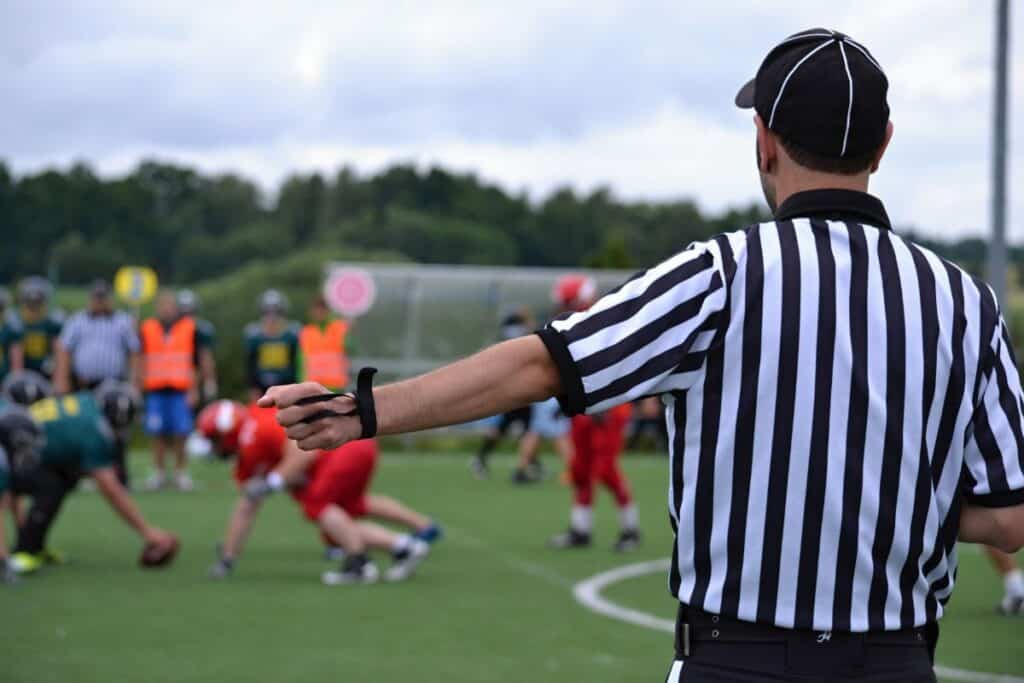
The game’s ebb and flow rests in the hands of officials who keep time, enforce rules, and set the pace. Their actions shape the contest’s rhythm, influencing how teams and players perform on the field.
Timing Operations: The Game and Play Clocks
The timekeeper holds the keys to the game’s heartbeat. They manage the game clock, which counts down each quarter, and the play clock, giving offenses 40 seconds to snap the ball. These ticking timers create urgency and drama.
When the ball goes out of bounds or an incomplete pass occurs, the game clock stops. It restarts on the snap for some plays or the referee’s signal for others. This dance of starts and stops adds tension to close games.
The play clock reset after each down keeps offenses moving. Delay of game penalties loom if teams don’t snap in time. This invisible countdown pushes the action forward, preventing teams from stalling.
Handling Halts in Play: Penalties, Timeouts, and Reviews
Flags flying and whistles blowing signal breaks in the action. Referees huddle to sort out infractions like holding or false starts. Their decisions can erase big gains or give teams free yards.
Coaches and players call timeouts to regroup or stop the clock. These strategic pauses let teams catch their breath and plan their next move. The crowd holds its breath, wondering what will happen next.
Replay reviews bring the game to a standstill. Officials pore over video evidence, making sure they got the call right. These pauses build suspense as fans await the final verdict.
Influencing Game Tempo and Player Rhythm
Officials set the pace between plays. A quick spot of the ball lets teams hurry up. A slower placement gives defenses time to substitute. This subtle control affects how fast or slow the game moves.
Momentum shifts with each referee decision. A missed call can fire up a team or deflate their spirits. Players must stay focused through these swings, not letting calls throw off their game.
By enforcing rules consistently, officials create a fair playing field. This lets players showcase their skills without unfair advantages. The best refs blend into the background, letting the athletes shine.
Frequently Asked Questions
College football officiating involves a complex web of responsibilities and roles. The seven officials on the field work together to ensure fair play and enforce the rules of the game. Their duties span from pre-game preparations to post-game reports.
What specific responsibilities do college football referees have during a game?
Referees in college football oversee the entire officiating crew. They make final decisions on penalties and rule interpretations. The referee also communicates with coaches about game situations and player conduct.
During plays, the referee positions themselves behind the offensive backfield. They watch for false starts, illegal shifts, and quarterback infractions. After touchdowns, the referee signals the score to the press box.
How do the roles differ among the seven officials in a college football match?
Each official has a unique role and area of focus on the field. The umpire, for example, watches the offensive line for holding and illegal blocks. The head linesman monitors the line of scrimmage and tracks the downs.
The field judge and side judge focus on pass interference and illegal contact downfield. The back judge watches for safety violations and monitors the play clock. The line judge assists with offside calls and monitors the sideline.
Can you explain the chain of command among NCAA football game officials?
The referee leads the officiating crew and has final authority on all rulings. They coordinate with other officials to make decisions on complex plays or rule interpretations. The umpire often serves as second-in-command.
During disputes or conferences, the referee gathers input from relevant officials before making a final call. They also communicate directly with coaches and players to explain rulings and manage the game.
What is the process for selecting officials for college football games?
NCAA conferences typically handle the selection and assignment of officials for regular season games. They evaluate officials based on performance, experience, and fitness levels.
For bowl games and playoffs, a national committee selects the top-performing officials from across all conferences. These assignments are considered prestigious honors for college football referees.
In what ways do the duties of college and NFL football referees differ?
While the basic roles are similar, college referees face unique challenges. They must adapt to different offensive styles and tempos common in college football. College games also have distinct clock rules and overtime procedures.
NFL referees deal with more complex replay review systems and stricter enforcement of certain rules. College officials often work more games per season across a wider geographic area than their NFL counterparts.
What training or qualifications are required for someone to become a college football official?
Aspiring college football officials typically start at lower levels like high school or small college leagues. They must complete certification programs that cover rules, mechanics, and on-field positioning.
Physical fitness is crucial, as officials must keep up with fast-paced game action. Many conferences require officials to pass annual fitness tests and rules exams. Ongoing training and evaluation help referees advance to higher levels of competition.
If you liked this article, be sure to read about how football officials can now reverse a call on the field without video review!