
11 Body Weight Exercises for High School Soccer Players: Unleashing Your Inner Champion on the Pitch
Soccer players, get ready to take your game to the next level. You’re about to discover a set of exercises that will transform your performance on the field.

These bodyweight exercises will help you build strength, speed, and agility without needing any fancy equipment. Whether you’re a striker looking to improve your shooting power or a defender aiming to boost your tackling ability, these moves will make you a more well-rounded player. Get ready to sweat and see real results that will leave your opponents in awe.
1) Push-Ups
Push-ups are a cornerstone of bodyweight training for soccer players. You’ll find this exercise builds upper body strength crucial for those physical battles on the pitch. As you lower your chest to the ground and push back up, you’re engaging your chest, shoulders, and triceps.
Don’t underestimate the core stability push-ups develop. This translates directly to your ability to shield the ball and maintain balance when jostling with opponents. You’ll notice improved posture and reduced risk of upper body injuries too.
Start with standard push-ups, keeping your body in a straight line from head to heels. As you progress, try variations like wide grip or diamond push-ups to target different muscle groups. These tweaks keep your workouts fresh and challenging.
Remember, quality trumps quantity. Focus on perfect form with each repetition. Lower yourself slowly, pause briefly at the bottom, then explode upwards. This controlled movement maximizes muscle engagement and mimics the explosive power you need on the field.
Aim for 3-4 sets of 10-15 reps, adjusting based on your fitness level. You can do push-ups anywhere, making them perfect for at-home training or quick warm-ups before practice. Embrace the burn – it’s your ticket to dominating those physical duels and unleashing powerful throw-ins that’ll leave opponents in awe.
2) Pull-Ups

Pull-ups are a game-changer for soccer players. You’ll feel the burn as you work your upper body, building strength that’ll give you an edge on the field.
Picture yourself hanging from the bar, muscles tensed. As you pull up, you’re not just lifting your body weight – you’re forging the power to outmuscle opponents and win those crucial aerial duels.
This exercise targets your back, shoulders, and arms. It’s like a secret weapon for headers and throw-ins. Every rep brings you closer to dominating those high balls.
Don’t worry if you can’t do many at first. Start with assisted pull-ups or negative reps. You’ll be amazed at how quickly your strength grows.
Remember, it’s not just about the numbers. Focus on form. Controlled movements build real, functional strength that translates directly to your soccer performance.
As you progress, mix it up with different grips. Wide, narrow, underhand – each variation challenges your muscles in new ways, keeping your body guessing and growing stronger.
Pull-ups aren’t just an exercise; they’re a testament to your dedication. Each rep is a step towards becoming a more complete player. Embrace the challenge, and watch your game soar to new heights.
3) Plank Holds
Plank holds are a soccer player’s secret weapon. You’ll build core strength that’ll make you a force to be reckoned with on the field. This exercise targets your abs, back, and shoulders all at once.
To do a plank, start in a push-up position. Keep your body straight as a board, from head to heels. Engage your core and hold that position. It’s simple, but don’t be fooled – it’s tough!
Start with 30-second holds. As you get stronger, aim for longer durations. You’ll feel the burn, but that’s the sign of your body getting stronger. Planks are great for improving balance and stability, crucial skills for any soccer player.
Mix it up with side planks too. These target your obliques, which are key for those quick turns and jukes you’ll need on the pitch. Roll onto one side, prop yourself up on your elbow, and lift your hips. Hold and feel those side muscles working.
Remember, form is everything. Keep your body aligned and your core tight. Don’t let your hips sag or your back arch. You’re building the foundation for powerful kicks and unshakeable balance.
Incorporate planks into your routine 3-4 times a week. You’ll soon notice improved stability when dribbling and more power in your shots. It’s these small exercises that make the big difference when game day arrives.
4) Jump Squats

Jump squats are a game-changer for high school soccer players. You’ll feel the power surge through your legs as you explode upwards, mimicking the intensity of those crucial moments on the field.
Start with your feet shoulder-width apart, just like you’re about to make a defensive stance. Lower your body into a squat position, keeping your chest up and core tight. Now, here’s where the magic happens – push through your heels and jump explosively. Feel that burn in your quads and glutes? That’s the strength you’ll need for those game-winning leaps.
As you land, soften your knees and sink right back into the squat. It’s all about that smooth transition, just like when you’re controlling the ball mid-air. Aim for 3 sets of 10-15 reps, but remember, quality trumps quantity every time.
This exercise isn’t just about building leg power. You’re also honing your balance and coordination – crucial skills when you’re jostling for position in a crowded penalty box. Plus, you’re giving your cardiovascular system a run for its money.
Incorporate jump squats into your routine 2-3 times a week. You’ll soon notice the difference when you’re sprinting down the field or leaping for that perfect header. It’s exercises like these that separate the good players from the great ones. Now, get ready to jump your way to soccer stardom!
5) Burpees
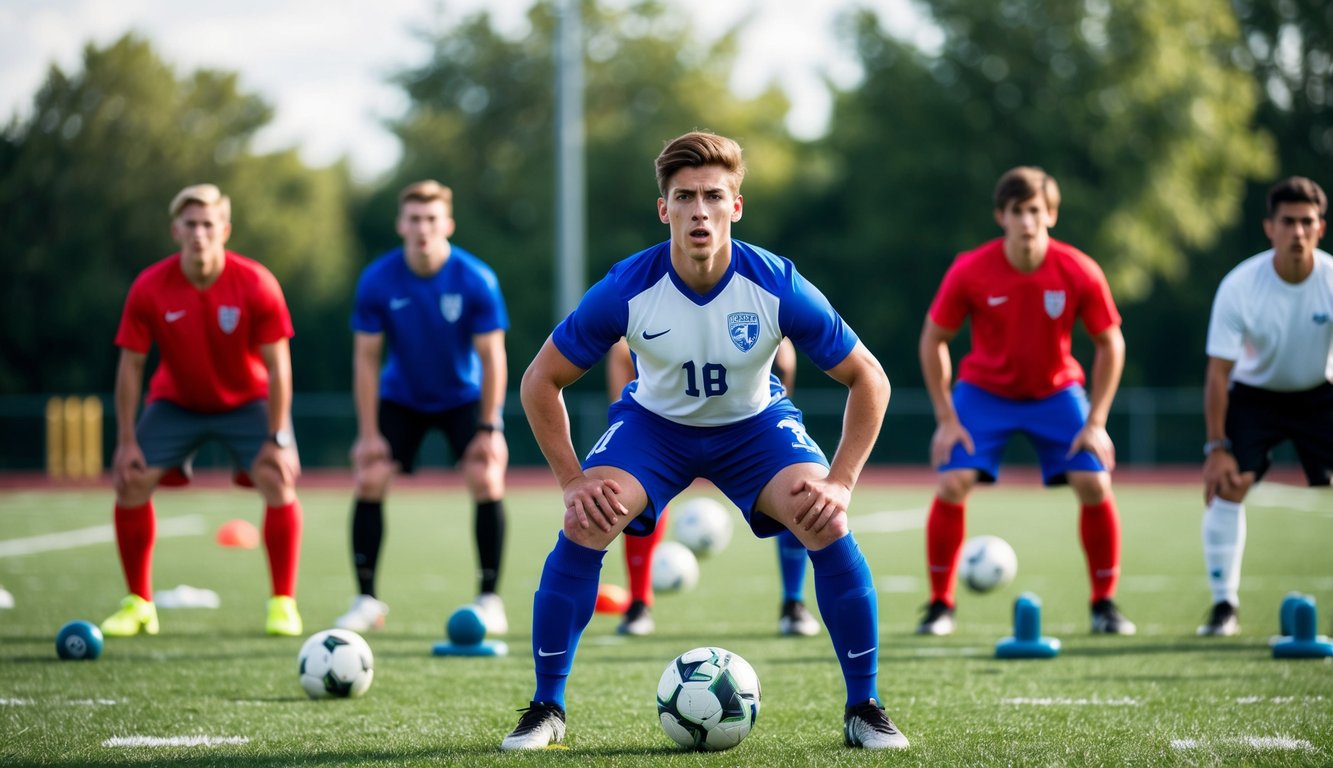
Burpees are a game-changer for high school soccer players. This full-body exercise will push you to your limits and boost your on-field performance.
To perform a burpee, start with your feet shoulder-width apart. Drop into a squat, place your hands on the ground, and kick your legs back into a plank position. Do a push-up, then explosively bring your feet back to your hands and jump up with your arms raised.
Burpees build muscular strength and enhance cardiovascular endurance. This combo is crucial for maintaining high energy levels throughout a match. You’ll feel the burn in your legs, core, and upper body.
As a soccer player, burpees will improve your explosive power, speed, and jumping ability. These are key skills for winning headers, making tackles, and outmaneuvering opponents on the pitch.
Start with 3 sets of 10 burpees, resting 60 seconds between sets. As you get stronger, increase the reps or decrease rest time. You can even add burpees to your warm-up routine to kickstart your training sessions.
Remember, proper form is crucial. Keep your core tight and maintain a straight line from head to heels in the plank position. Push yourself, but listen to your body and progress gradually to avoid injury.
6) Lunges
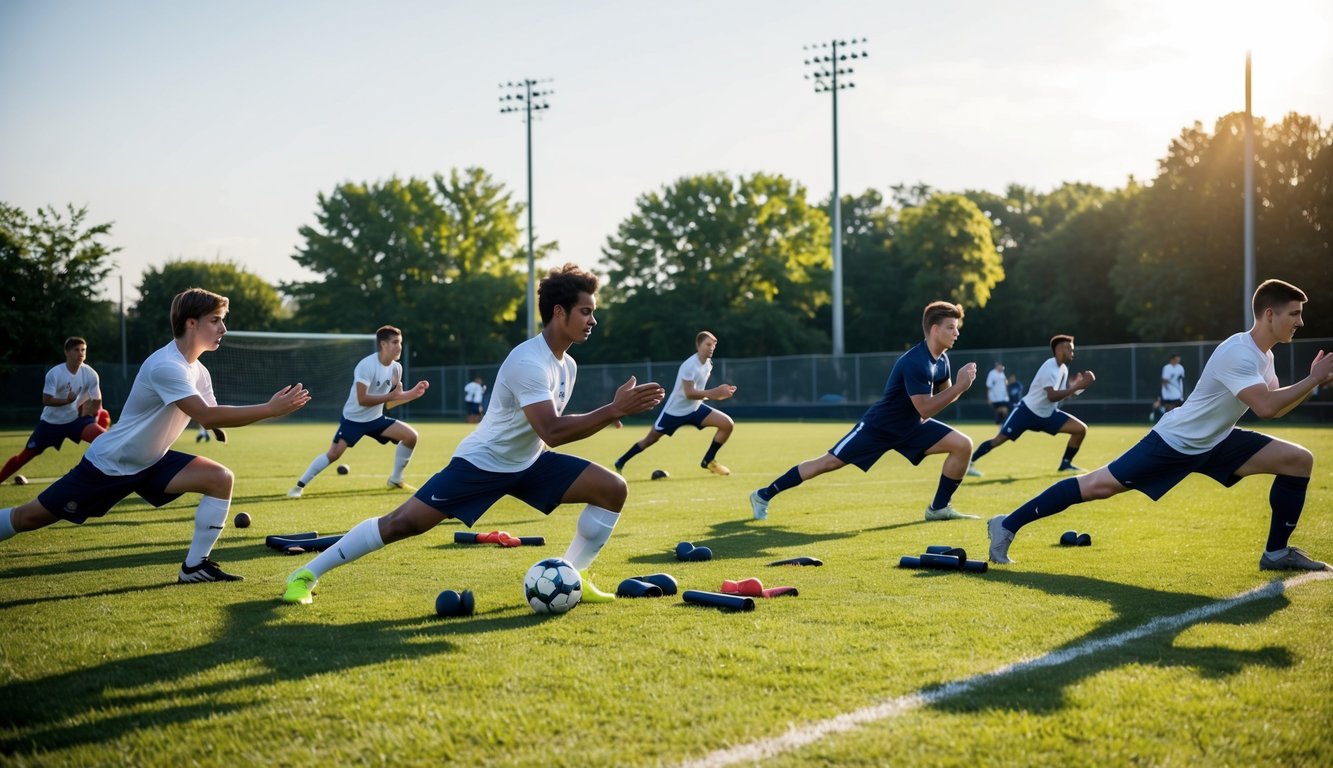
Lunges are a game-changer for soccer players. You’ll love how they boost your lower body strength and stability. These simple moves can make a world of difference on the field.
Picture yourself stepping forward, lowering your body with controlled power. That’s the essence of a lunge. It’s like mimicking those crucial moments when you’re battling for the ball.
As you perform lunges, you’re not just working out. You’re preparing for those split-second decisions that can turn the tide of a match. Each rep builds the strength you need for those explosive sprints and quick direction changes.
But there’s more to lunges than meets the eye. They’re vital in developing lower body strength and stability. This means you’ll have better balance when challenging opponents and improved stride length when sprinting.
Here’s how to nail the perfect lunge: Start by standing tall, feet hip-width apart. Step forward with one leg, lowering your body until both knees are at 90-degree angles. Push back up to the starting position. Repeat with the other leg.
Mix it up with variations like reverse lunges or walking lunges. These will challenge your body in different ways, just like the unpredictable nature of a soccer match.
Remember, lunges aren’t just an exercise. They’re your secret weapon for dominating the pitch. Embrace them, and you’ll feel the difference when you’re out there, giving your all for 90 minutes.
7) Mountain Climbers
Mountain climbers are a dynamic exercise that will get your heart racing and muscles burning. You’ll feel like you’re scaling a mountain, even on flat ground. This total body workout targets your core, legs, and arms all at once.
To start, get into a plank position. Keep your arms straight and your body in a line. Now, bring your right knee towards your chest. Quickly switch, bringing your left knee forward as you push your right leg back.
Keep alternating legs as if you’re running in place. The key is to move fast while maintaining good form. You’ll feel your abs engage as you stabilize your body.
Mountain climbers are great for building endurance and agility. These skills are crucial on the soccer field. You’ll improve your ability to change direction quickly and maintain balance during intense plays.
Try doing mountain climbers for 30 seconds at a time. Rest for 15 seconds, then repeat. As you get stronger, increase your work time and decrease your rest.
Remember to breathe steadily throughout the exercise. Keep your core tight and your hips low. You’re not just working out – you’re preparing for those game-winning sprints and tackles.
8) Tricep Dips
Tricep dips are a powerhouse move for young soccer players looking to build upper body strength. You don’t need fancy equipment – just find a sturdy bench or chair and you’re ready to go.
Start by sitting on the edge of your chosen surface. Place your hands on either side of your hips, gripping the edge. Slide your backside off the bench, supporting your weight with your arms.
Now comes the real work. Lower your body by bending your elbows, keeping them close to your sides. Feel the burn in your triceps as you push yourself back up. That’s one rep.
Tricep dips target your arm muscles, which are crucial for throwing and shielding the ball. Strong triceps also help you maintain balance when jostling with opponents.
Aim for 3 sets of 10-15 reps. As you get stronger, challenge yourself by elevating your feet on another bench. This increases the resistance and takes your tricep workout to the next level.
Remember, proper form is key. Keep your back close to the bench and your shoulders down. Avoid swinging or using momentum – slow and controlled movements will yield the best results.
Incorporating tricep dips into your routine will give you that extra edge on the field. You’ll notice improved arm strength, better ball control, and more powerful throws. Keep at it, and watch your game soar to new heights.
9) Bicycle Crunches
Bicycle crunches are a powerhouse exercise for soccer players. You’ll feel the burn as you target your core, obliques, and hip flexors. This move mimics the rotational movement you need on the field.
To start, lie on your back with your hands behind your head. Lift your shoulders off the ground and bring your right elbow towards your left knee. At the same time, extend your right leg.
Now, switch sides. Bring your left elbow to your right knee as you extend your left leg. Keep alternating in a smooth, controlled motion. It’s like you’re pedaling an invisible bicycle.
As you perform this exercise, focus on engaging your core. Feel the twist in your midsection with each rep. This rotation is key for those quick turns and pivots you make during a match.
Bicycle crunches will help you develop the strength and stability needed for powerful kicks and tackles. They’ll also improve your balance, a crucial skill for any soccer player.
Aim for 3 sets of 15-20 reps on each side. As you get stronger, increase the number of reps or slow down the movement to really feel the burn. Remember, quality over quantity is the name of the game here.
10) High Knees
High knees are a fantastic way to boost your soccer skills. This exercise gets your heart pumping and legs moving, perfect for those quick sprints on the field.
You’ll feel the burn as you lift those knees high, mimicking the explosive movements you need during a match. It’s like you’re running in place, but with extra oomph!
To do high knees, start by standing tall. Lift your right knee up towards your chest, then quickly switch to the left. Keep alternating at a rapid pace. Your arms should be pumping too, just like when you’re dashing down the pitch.
Fast high knees are a great addition to your warm-up routine. Try doing them for 5-second bursts to really get your blood flowing before practice or a big game.
Remember, the higher you lift those knees, the more you’ll work those hip flexors and quads. These muscles are crucial for those powerful kicks and quick direction changes on the soccer field.
As you perform high knees, imagine you’re evading defenders or racing towards the goal. This mental connection will help you push harder and get more out of the exercise.
11) Side Plank
Ready to strengthen your core and boost your stability on the soccer field? The side plank is your secret weapon. This bodyweight exercise will challenge your obliques and test your balance.
To start, lie on your side with your elbow directly under your shoulder. Lift your hips off the ground, creating a straight line from your head to your feet. You’ll feel the burn in your side muscles almost instantly.
Hold this position for 30 seconds to a minute. As you get stronger, increase your hold time. Remember to breathe steadily throughout the exercise. It’s not just about endurance; it’s about maintaining proper form.
Switch sides and repeat. You’ll notice improvements in your ability to shield the ball and maintain balance during those crucial one-on-one challenges. This exercise isn’t just about looking good; it’s about performing better on the pitch.
Incorporate side planks into your routine 2-3 times a week. You’ll soon find yourself more agile and resistant to injury. It’s these small, consistent efforts that separate good players from great ones.
So, next time you’re working on your soccer strength, don’t forget the side plank. It’s a game-changer that will have you dominating the field in no time.
Benefits of Body Weight Exercises for High School Soccer Players
Body weight exercises offer major advantages for young soccer players. They build strength, prevent injuries, and boost agility without any need for equipment.
Improved Strength and Endurance
Bodyweight training helps you develop the muscle power and stamina crucial for soccer. Push-ups strengthen your chest and arms, key for throw-ins and shielding the ball. Squats and lunges build leg strength for powerful kicks and quick sprints.
You’ll notice improved endurance too. These exercises work multiple muscle groups at once, just like in a real game. This trains your body to handle the non-stop action of a 90-minute match.
As you progress, you can make exercises harder. Try one-legged squats or clap push-ups. This constant challenge keeps your muscles adapting and growing stronger.
Injury Prevention
Body weight exercises are great for avoiding injuries. They strengthen the muscles that support your joints, reducing the risk of sprains and strains.
Core exercises like planks and Russian twists are especially important. A strong core helps you stay balanced when changing direction quickly or getting bumped by opponents.
These exercises also improve your body awareness. You learn to control your movements better, which helps prevent awkward landings or twists that could lead to injury.
Plus, body weight training is low-impact. This means less stress on your joints compared to weightlifting or running on hard surfaces.
Enhanced Agility and Flexibility
Soccer demands quick movements in all directions. Body weight exercises can boost your agility and flexibility, making you a more nimble player.
Burpees and mountain climbers improve your ability to change direction fast. These exercises mimic the explosive movements you need on the field.
Lunges and leg swings increase your range of motion. This helps you reach for balls that seem just out of reach.
Many body weight exercises also work on balance. Single-leg deadlifts, for example, train you to stay steady on one foot. This skill comes in handy when you’re dribbling past defenders or stretching for a tackle.
Proper Techniques and Form
Getting the basics right is crucial for soccer players. Good form prevents injuries and boosts performance. Let’s look at how to warm up, cool down, and maintain proper posture during exercises.
Warm-Up and Cool Down Routines
Start with a light jog to get your blood flowing. Do dynamic stretches like leg swings and arm circles. These prepare your muscles for action.
Include sport-specific movements like high knees and butt kicks. They mimic soccer motions and prime your body for the workout ahead.
After exercising, cool down with a slow jog or walk. Follow up with static stretches, holding each for 15-30 seconds. This helps your muscles relax and recover.
Warm-ups and cool-downs are vital for injury prevention. Don’t skip them, even if you’re short on time.
Correct Posture and Alignment
Keep your back straight and core engaged during exercises. This protects your spine and improves stability.
For squats and lunges, keep your knees in line with your toes. Don’t let them collapse inward. This guards against knee injuries.
When doing planks or push-ups, maintain a straight line from head to heels. Avoid sagging hips or arched backs.
Pay attention to your foot placement. It affects your whole body’s alignment. Keep feet hip-width apart for most exercises unless instructed otherwise.
Remember, quality beats quantity. It’s better to do fewer reps with perfect form than many with poor technique.
Incorporating Body Weight Exercises Into Training Plans
Body weight exercises can supercharge your soccer training. You’ll boost strength, agility, and endurance without fancy equipment. Let’s dive into how to make these exercises work for you.
Balancing Drills and Workouts
Mix body weight exercises with your regular soccer drills. Start with a 15-minute warm-up of light jogging and stretches. Then, do 20 minutes of bodyweight exercises like push-ups, squats, and lunges. Follow this with 30 minutes of ball work and sprints.
Try this mini-circuit during practice:
- 10 burpees
- 20 mountain climbers
- 15 jump squats
Repeat 3 times with 30 seconds rest between sets. This combo builds explosive power for those game-winning plays.
Periodization and Progression
Plan your training in phases to peak at the right time. Start with a base phase focusing on high-rep, low-intensity exercises. Gradually increase difficulty as the season approaches.
Week 1-4: 3 sets of 15 reps for each exercise
Week 5-8: 4 sets of 12 reps with harder variations
Week 9-12: 5 sets of 8-10 reps of advanced moves
Track your progress. Can you do more push-ups or pull-ups than last month? Adjust your routine to keep challenging yourself. Remember, consistency is key. Stick to your plan, and you’ll see results on the field.
Frequently Asked Questions
Bodyweight exercises offer high school soccer players a powerful way to boost their game. These workouts build strength, speed, and agility without needing fancy equipment.
What are the most effective bodyweight exercises for enhancing soccer performance in high school athletes?
You’ll find push-ups, pull-ups, and planks at the top of the list for soccer-specific bodyweight exercises. These moves build core strength and upper body power, essential for winning those on-field battles.
Jump squats and burpees round out the top five, adding explosive leg power to your arsenal. These exercises mimic the quick bursts of speed you need on the pitch.
How can high school soccer players develop strength and endurance through at-home workouts?
Your living room can become your personal training ground. Mix push-ups, planks, and squats into a circuit workout. Aim for 3-4 sets, pushing yourself for 30 seconds per exercise.
Add in some mountain climbers and high knees to boost your cardio. This combo will have you match-fit in no time, all from the comfort of home.
What is the role of functional bodyweight exercises in improving on-field skills for young soccer talent?
Functional exercises directly translate to your performance on the field. Lunges improve your ability to change direction quickly. Single-leg deadlifts boost your balance for those tricky ball control moments.
These moves don’t just build strength – they enhance your body awareness and coordination. You’ll feel the difference when you’re weaving through defenders or leaping for that crucial header.
Can upper body workouts contribute to the success of high school soccer players, and if so, how?
Absolutely! A strong upper body is your secret weapon on the soccer field. Push-ups and pull-ups build the chest and back muscles you need for powerful throw-ins and shoulder-to-shoulder challenges.
Don’t forget about your core. Planks and their variations are crucial for maintaining balance and generating power in your kicks and passes.
In what ways can a full body workout routine benefit high school soccer players during the off-season?
The off-season is your chance to level up. A full-body routine keeps you in top shape year-round. Mix in bodyweight staples like burpees and mountain climbers with soccer-specific drills.
This approach maintains your cardiovascular fitness while building strength. You’ll return to pre-season training ahead of the pack, ready to impress your coaches and dominate on the field.
What weight training approaches are endorsed by sports professionals for adolescent soccer players?
Sports pros recommend a balanced approach for young soccer stars. Bodyweight exercises form the foundation, especially for those new to strength training.
As you progress, add in light weights and resistance bands. Focus on compound movements like squats and deadlifts. Always prioritize proper form over heavy weights to prevent injuries and build a solid strength base.