
15 Most Common Penalties in College Football and What They Mean: Decoding the Zebras’ Signals on Saturday Afternoons
College football thrills fans with its intense action and fierce rivalries. But to truly appreciate the game, you need to understand its rules and penalties.
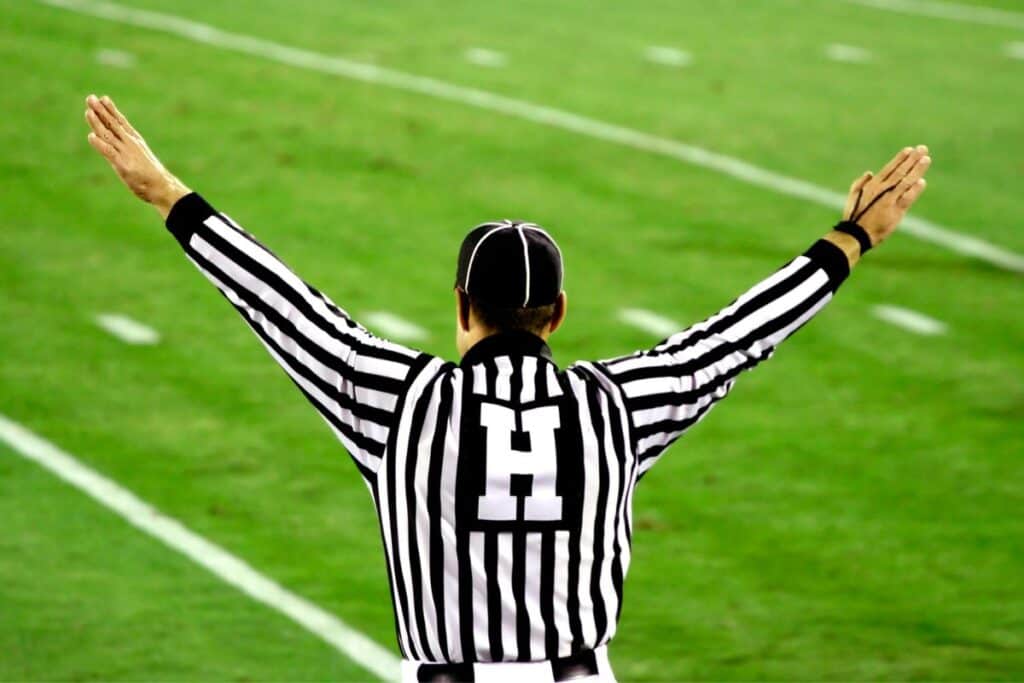
Knowing the most common penalties in college football can help you better follow the action on the field. These infractions shape the flow of play and often have a big impact on the outcome. From holding calls to pass interference, each penalty carries its own consequences that can shift momentum in an instant.
1) Offside
Picture this: you’re watching a college football game, and suddenly the referee’s whistle blows. The yellow flag flies, and you hear the call: “Offside, defense.” But what does it mean?
Offside is a common penalty in football that occurs when a player crosses the line of scrimmage before the ball is snapped. It’s like jumping the gun in a race, but on the gridiron.
You’ll often see this penalty called on eager defensive linemen, itching to get a jump on the play. They’re so focused on tackling the quarterback or stopping the run that they leap forward a split second too soon.
But remember, offense isn’t immune to this call either. An overzealous receiver or running back can be flagged for lining up beyond the line of scrimmage before the snap.
When the referee signals offside, you’ll see them step forward with one hand on their hip and the other arm extended, pointing towards the offending team’s end zone. It’s a clear indication that someone was a little too anxious to make a play.
The penalty for offside? A mere 5 yards. It might not seem like much, but in a game of inches, those 5 yards can make all the difference.
2) False Start
Picture this: You’re on the edge of your seat, the crowd’s roar filling your ears as the offense lines up. Suddenly, a player twitches before the snap, and the whistle blows. That’s a false start, one of the most common penalties in football.
False starts happen when an offensive player moves before the ball is snapped. It’s a mistake that can disrupt the rhythm of the game and cost your team valuable yardage. You’ll see the refs throw their flags and signal the infraction with a rolling motion of their hands.
This penalty sets the offense back 5 yards. It might not seem like much, but those yards can make the difference between a first down and a punt. The beauty of football lies in its precision, and false starts remind us how crucial timing and discipline are.
You might wonder why players jump early. Sometimes, it’s nerves; other times, it’s an attempt to get a split-second advantage. But in college football, where every inch matters, these small mistakes can have big consequences.
As you watch the game, keep an eye out for those subtle movements before the snap. You’ll start to appreciate the concentration required of every player on the line. It’s these details that make football a true test of focus and teamwork.
3) Holding
Holding is a penalty that’ll make you groan when you see it called. It’s one of the most common infractions in college football, and it can happen on both offense and defense.
Picture this: you’re watching a crucial play unfold. Suddenly, you spot a player grabbing onto an opponent’s jersey or body part. That’s holding, folks. It’s a no-no that can cost your team dearly.
On offense, holding will set you back 10 yards and force a repeat of the down. It’s a drive-killer that can turn a promising possession into a punt situation.
When the defense commits holding, it’s a different story. You’ll see the offense gain 5 yards and an automatic first down. Talk about a momentum shift!
The referee’s signal for holding is unmistakable. You’ll see them grab one wrist with their other hand, mimicking the illegal hold. It’s a sight that can make your heart sink or soar, depending on which team you’re rooting for.
Remember, holding can occur anywhere on the field. Whether it’s a lineman trying to protect the quarterback or a defensive back desperate to stop a receiver, this penalty keeps the game fair and the action clean.
4) Pass Interference
Pass interference is one of the most impactful penalties in college football. You’ll often see it called when a defender gets too handsy with a receiver downfield.
The rule is simple: players can’t impede an opponent’s ability to catch the ball before it arrives. This applies to both offense and defense.
When the defense commits pass interference, it’s a 15-yard penalty from the line of scrimmage. If the foul occurs inside the 15-yard line, it’s placed at the spot of the foul.
Offensive pass interference is less common but equally important. If a receiver pushes off or creates separation illegally, you’ll see the yellow flag fly.
The penalty for offensive pass interference is also 15 yards, but it’s assessed from the previous spot. This can be a drive-killer for the offense.
You might notice a key difference between college and pro rules here. In the NFL, defensive pass interference is a spot foul, potentially resulting in massive yardage losses.
Refs use their judgment to determine if contact is incidental or if it truly impacted the play. It’s a tough call, but one that can change the course of a game in an instant.
5) Unsportsmanlike Conduct
In college football, unsportsmanlike conduct is a serious penalty that can cost your team 15 yards. This rule aims to keep the game respectful and fair for everyone involved.
You might wonder what counts as unsportsmanlike conduct. It includes taunting opponents, excessive celebrations, or any behavior that disrespects the game or other players. Even certain gestures can land you in hot water with the refs.
Remember, if you’re flagged for this penalty, it’s not just yards at stake. Two unsportsmanlike conduct fouls in a single game will get you ejected. That means you’re out for the rest of the game, leaving your team a player short.
The refs are always watching, so keep your cool out there. Celebrate your victories, but do it with class. Show respect for your opponents and the game itself. After all, sportsmanship is what makes college football great.
This penalty isn’t just about following rules. It’s about upholding the spirit of the game. When you step onto that field, you represent your team, your school, and the sport itself. Play hard, play fair, and always remember the importance of good sportsmanship.
6) Delay of Game
Picture this: you’re on the edge of your seat, the crowd’s roar filling your ears as the offense lines up. The play clock ticks down, but the snap doesn’t come. That’s when you see it – the yellow flag flying through the air.
Delay of Game is a common penalty that keeps the game’s rhythm in check. It occurs when the offense fails to snap the ball before the play clock hits zero. This clock-watching dance is crucial to maintaining the game’s pace and fairness.
When the whistle blows for Delay of Game, you’ll see the referee make a distinct signal. He’ll cross his arms at chest level, palms facing down, like he’s keeping time to an invisible metronome.
The consequence? A 5-yard penalty against the offense. It might not seem like much, but those yards can be the difference between a first down and fourth-and-long. It’s a reminder that in college football, every second counts.
You might wonder why teams risk it. Sometimes it’s strategy – a last-ditch attempt to draw the defense offside. Other times, it’s simply poor clock management. Either way, it’s a penalty that can shift momentum and test a coach’s decision-making skills.
7) Illegal Formation
Picture this: you’re watching a college football game, and suddenly the referee throws a yellow flag. The call? Illegal formation. You might scratch your head, wondering what just happened on the field.
An illegal formation in football occurs when the offense fails to line up properly before the snap. The rules state that teams must have at least seven players on the line of scrimmage. It’s a dance of precision, and one misstep can cost your team dearly.
You’ll often see this penalty called when an offensive lineman lines up too far back. Those big guys up front need to be right on the line, ready to protect their quarterback and open lanes for runners.
Another common cause? Not enough players wearing eligible receiver numbers on the line. The rulebook demands at least five players with numbers between 50 and 79 on the line of scrimmage.
When the whistle blows for an illegal formation, your team takes a five-yard penalty. It might not seem like much, but in a game of inches, those yards can make or break a crucial drive.
As you watch from the stands or your living room, keep an eye on those pre-snap alignments. You’ll start to see the intricate chess match that unfolds before each play, with coaches and players alike working to gain every possible advantage within the rules.
8) Illegal Motion
Picture this: you’re watching a college football game, and just as the ball is about to be snapped, an offensive player starts moving. Your eyes dart to the referee, and sure enough, he’s throwing a flag. That’s illegal motion, one of the most common penalties you’ll see on the gridiron.
Illegal motion occurs when an offensive player is moving forward at the snap. It’s a subtle infraction that can easily slip past the untrained eye, but it’s crucial for maintaining fair play. You might see a receiver trying to get a head start or a running back inching forward too early.
This penalty sets the offense back 5 yards, potentially derailing a promising drive. It’s a testament to the precision required in football, where even the slightest misstep can cost your team.
As you watch more games, you’ll start to notice the intricate dance of pre-snap movements. Players can shift and move laterally, but that forward motion is a no-go. It’s these nuances that make football a game of inches and split-second timing.
Keep an eye out for the referee’s signal: hands rotating in front of the body. It’s a quick gesture that carries significant weight in the flow of the game. Understanding these penalties deepens your appreciation for the sport’s complexity and the athletes’ discipline.
9) Targeting
Targeting is one of the most controversial penalties in college football. You’ll see it called when a player makes forcible contact to an opponent’s head or neck area with their helmet, forearm, hand, or shoulder. It’s a rule designed to protect players from dangerous hits.
When you watch a game, you might see targeting called if a defender leads with the crown of their helmet or hits a defenseless player above the shoulders. The refs take this penalty seriously. If they call targeting, it results in a 15-yard penalty and an automatic first down for the offense.
But that’s not all. The player who commits the foul is ejected from the game. If it happens in the second half, they’ll also miss the first half of their next game. It’s a tough punishment, but it’s meant to discourage dangerous play.
You might see some debate about targeting calls during games. The refs can review the play using instant replay to make sure they got it right. Sometimes, what looks like targeting in real-time might not be after closer inspection.
Remember, the goal is player safety. While some fans argue the rule is too harsh, it’s there to protect the athletes you love to watch on the field.
10) Personal Foul
In college football, a personal foul is one of the most serious infractions you can witness on the field. It’s a penalty that can change the momentum of a game in an instant.
When you see a referee signal a personal foul, you know it’s going to cost the offending team 15 yards. That’s a significant chunk of real estate that can make or break a drive.
Personal fouls cover a range of dangerous or unsportsmanlike actions. You might see a player hit an opponent in the face at the line of scrimmage, resulting in this call.
Another common type is roughing the passer. You’ve probably seen a defensive player slam into the quarterback well after the ball is thrown. That’s a clear personal foul.
Unnecessary roughness falls under this category too. If you spot a player tackling with excessive force or continuing to hit after the whistle, expect the yellow flag to fly.
Remember, personal fouls aren’t just about yardage. If the defense commits one, it results in an automatic first down for the offense. That can be a game-changer, especially in crucial third-down situations.
As you watch college football, keep an eye out for these infractions. They’re not just penalties; they’re moments that can define the course of a game and test a team’s discipline under pressure.
11) Roughing the Passer
You’ve seen it happen countless times – a quarterback releases the ball, and a split second later, they’re hit by a rushing defender. This is where the roughing the passer penalty comes into play, a crucial rule designed to protect passers from unnecessary harm.
In college football, roughing the passer occurs when a defensive player makes overly aggressive contact with the quarterback after they’ve thrown the ball. The rule aims to shield the quarterback when they’re most vulnerable – just after releasing a pass.
You might wonder what constitutes “roughing.” It includes hitting the passer’s head or neck area, launching at them, or driving them into the ground with excessive force. Even landing on the quarterback with your full body weight can draw this flag.
The consequences of this infraction are severe. When called, roughing the passer results in a 15-yard penalty and an automatic first down for the offense. It’s a game-changing call that can swing momentum and extend drives.
You’ll notice this penalty often sparks debate among fans and analysts. The line between a clean hit and roughing can be razor-thin, leading to controversial calls that can decide games. As you watch, pay attention to how defenders approach quarterbacks after the throw – it’s a delicate balance of aggression and restraint.
12) Roughing the Kicker
Roughing the kicker is a serious offense in college football that can turn the tide of a game. You might see this penalty called when a defensive player makes forceful contact with the kicker or punter after the ball has been kicked.
The severity of this infraction is reflected in its punishment. A roughing the kicker penalty typically results in a 15-yard penalty and an automatic first down for the kicking team. This can be a game-changer, especially in close contests.
You’ll notice that officials take special care to protect kickers and punters. These players are particularly vulnerable when executing their kicks, often balancing on one foot and unable to defend themselves.
Recently, college football has made some changes to this rule. Players can no longer be penalized if the kicker or punter is more than 5 yards from where the ball was snapped. This adjustment aims to prevent unfair calls when kickers move far from their original position.
In video games like EA Sports College Football 25, developers have adjusted the frequency of AI-controlled players committing this penalty. This shows how important it is to accurately represent the nuances of football rules, even in virtual environments.
Remember, as a fan, you play a crucial role in understanding these rules. Your knowledge enhances your appreciation of the game’s finer points and the split-second decisions made on the field.
13) Face Mask
You’ve seen it happen countless times on the gridiron. A defender reaches out to make a tackle, and suddenly flags fly. The referee’s whistle blows, and you hear those dreaded words: “Face mask penalty.”
This infraction occurs when a player grabs, twists, or pulls an opponent’s face mask. It’s a serious foul that can result in injury, which is why officials keep a keen eye out for it.
In college football, face mask penalties come with a hefty price. You’ll see the offending team pushed back 15 yards from the spot of the foul. If the defense commits this penalty, it also results in an automatic first down for the offense.
But here’s something you might not know: both offensive and defensive players can be called for face mask penalties. It’s not just limited to tacklers. Any player who grabs an opponent’s face mask is at risk of drawing this flag.
You’ll often see the referee make a pulling motion near their face to signal this foul. It’s a clear gesture that leaves no doubt about the nature of the infraction.
Remember, the face mask rule exists for player safety. It’s crucial in preventing neck injuries and protecting players’ heads during the heat of battle on the field.
14) Clipping
Clipping is one of the most serious penalties you’ll encounter in college football. It’s a dangerous move that can cause severe injuries, which is why officials keep a sharp eye out for it.
You’ll see clipping called when a player blocks an opponent from behind, below the waist. This sneaky tactic can take a player completely by surprise, leaving them vulnerable to knee and ankle injuries.
When the referee spots clipping, you’ll see them make a distinct signal. They’ll chop one hand against the back of their thigh, mimicking the illegal block.
The consequences of clipping are steep. Your team will face a hefty 15-yard penalty. If it happens near your own goal line, you could even be looking at a safety.
Coaches drill their players on proper blocking techniques to avoid this costly mistake. You’ll often hear them emphasizing the importance of engaging opponents from the front or side.
As a fan, you play a role too. By understanding penalties like clipping, you’re not just watching the game – you’re truly experiencing it. You’re part of the collective effort to keep college football safe and fair for everyone on the field.
15) Intentional Grounding
You’ve seen it before – a quarterback under pressure, desperately flinging the ball away. But when does this become intentional grounding?
In college football, intentional grounding occurs when a passer throws the ball away to avoid a sack without a realistic chance of completion. It’s a safeguard against quarterbacks simply tossing the ball to avoid a loss of yardage.
You’ll notice officials looking for key elements. Is the quarterback outside the tackle box? Is there an eligible receiver in the area? Did the pass reach the line of scrimmage? These factors determine whether the play is legal or not.
When called, intentional grounding results in a loss of down and 10 yards from the spot of the foul. If it happens in the end zone, it’s a safety.
You might wonder about spiking the ball to stop the clock. Don’t worry – that’s perfectly legal as long as it’s done immediately after the snap.
This penalty can be a game-changer. It can push an offense out of field goal range or create a third-and-long situation. As a fan, you’ll appreciate the strategy involved in avoiding this costly mistake.
Understanding Penalties in College Football
Penalties shape the flow and fairness of college football. They keep players in check and ensure a level playing field. Let’s dig into how officials enforce the rules and how these calls impact the game.
The Role of Officials
On the field, officials watch closely for rule violations. They use hand signals to show what went wrong. You might see an ref toss a yellow flag when they spot a foul.
Here’s what happens next:
- The ref explains the call
- They mark off yards
- Play resumes
Officials must make split-second choices. They keep an eye on:
- Player safety
- Fair play
- Game flow
It’s a tough job. Refs need to know the rulebook inside out. They also need sharp eyes and quick thinking.
Impact on the Game
Penalties can flip a game on its head. A single call might erase a big play or give a team new life. Common penalties like holding can cost 10 yards. That’s enough to kill a drive.
Some penalties hurt more than others:
- Pass interference: Spot foul, up to 15 yards
- Targeting: 15 yards, player ejection
- Unsportsmanlike conduct: 15 yards
These calls don’t just move the chains. They swing momentum. A well-timed flag can fire up a team or crush their spirits.
Coaches drill their players to avoid penalties. Clean play keeps drives alive and defenses off the field. In tight games, discipline often makes the difference between victory and defeat.
Types of Penalties and Their Meanings
College football penalties keep the game fair and safe. You’ll see refs toss yellow flags for various infractions, each with its own consequences. Let’s break down the most common types of penalties you’ll encounter on the gridiron.
Personal Fouls
Personal fouls are serious violations that can hurt players or give unfair advantages. You’ll see 15-yard penalties for these infractions. Roughing the passer occurs when a defender hits the quarterback after they’ve thrown the ball. Targeting is a dangerous hit to an opponent’s head or neck area.
Face mask penalties happen when a player grabs and pulls an opponent’s face mask. Unnecessary roughness covers a range of overly aggressive actions. Unsportsmanlike conduct includes taunting or excessive celebrations.
These fouls can change the game’s momentum. Teams may lose key players if ejected for serious infractions like targeting.
Technical Fouls
Technical fouls relate to the rules of play rather than player safety. False starts occur when an offensive player moves before the snap. Offsides happen when a defensive player crosses the line of scrimmage before the snap.
Delay of game is called when the offense doesn’t snap the ball before the play clock expires. Illegal formation penalties happen when the offense doesn’t have enough players on the line of scrimmage.
Pass interference can be called on both offense and defense. It happens when a player illegally prevents an opponent from catching a pass.
These penalties often result in 5-yard losses or replaying the down. They can stall drives or give the opposing team better field position.
Minor Infractions
Minor infractions are less severe but still impact the game. Holding occurs when a player grabs an opponent to gain an advantage. It’s a 10-yard penalty for the offense and 5 yards for the defense.
Illegal blocks, like blocks in the back or below the waist, result in 10-yard penalties. Ineligible receiver downfield happens when a lineman goes too far past the line of scrimmage on a pass play.
False start and encroachment are 5-yard penalties that often occur before the snap. These minor infractions can disrupt offensive rhythm and cause teams to face longer down-and-distance situations.
You’ll see refs use specific hand signals for each penalty. Knowing these helps you follow the game better and understand why plays get called back.